Essays

Featured artist

Voices from the exhibition's network of artists, educators and organizers — on why art still matters as a vehicle for human rights.


Faculty of Fine Arts, University of Seville, Spain
www.233art.com →

My ID name is Ramon Blanco-Barrera, but my Visual Artist name is a number: '233'. I use this number in reference to the 'identity game' of our overpopulated world system. My work sends social and political messages in order to make people reflect about their communities, both local and universal, constantly bringing up human rights concepts and values.

This article speaks about an artwork made during my experience as a Visiting Artist and Researcher in Residence at UC Berkeley during the Fall of 2016 as part of my PhD Program. My focus is around how the use of Arts can change our Society through Education, taking the New Technologies of Communication as a relevant tool to improve.

Within this context I based and designed a collaborative art practice workshop for students and an exhibition open to the public at the Department of Art Practice – UC Berkeley. Some of the artworks presented were:

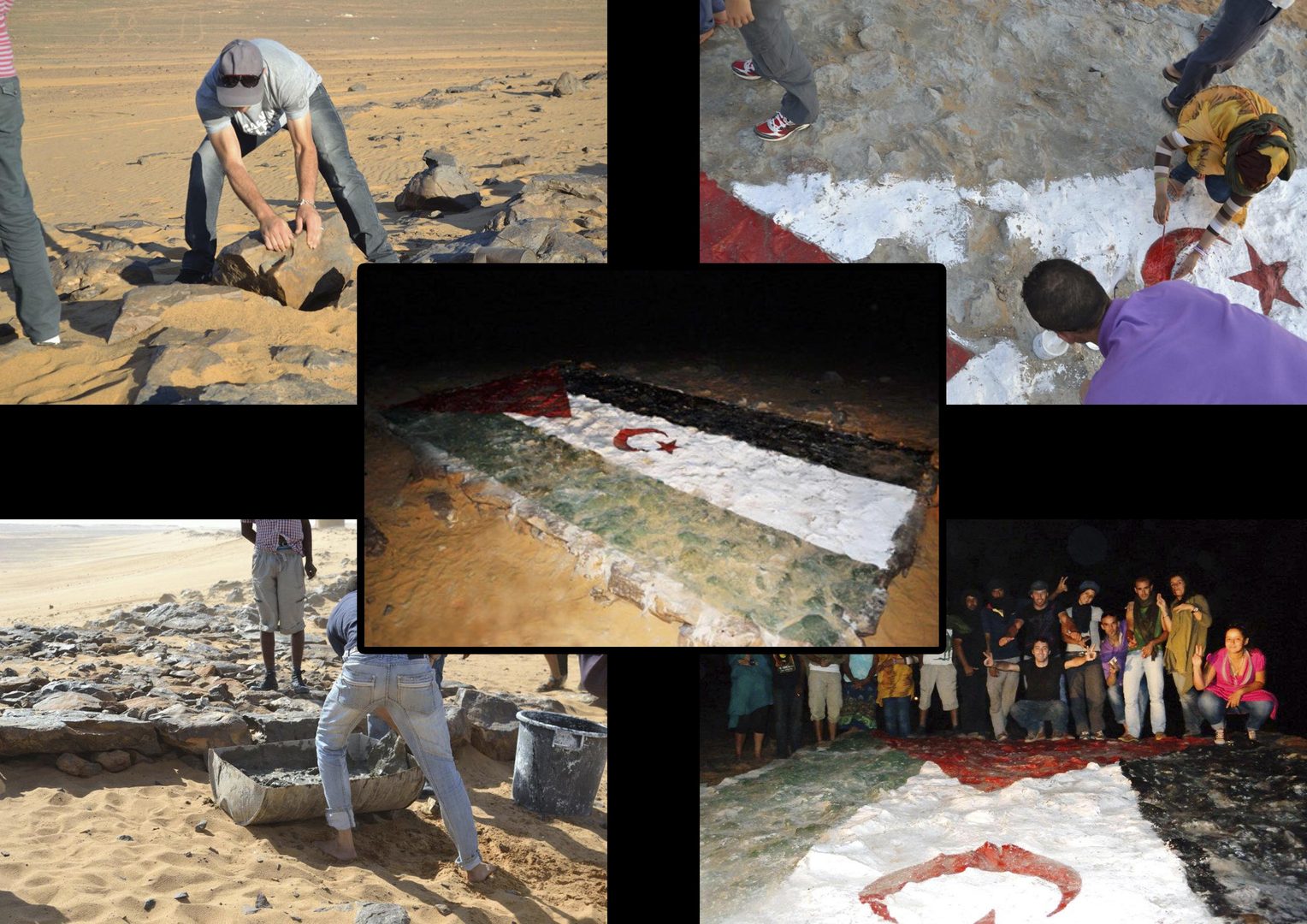
Sahara Libre Flag (2011) — Installation / public monument, autochthonous stones, sand and cement, 8 × 4 × 0.5 meters, 'Dajhla' Saharawi Refugee Camp, Tindouf, Algeria. A project made to raise awareness internationally, claiming the right of Saharawi people to their land.

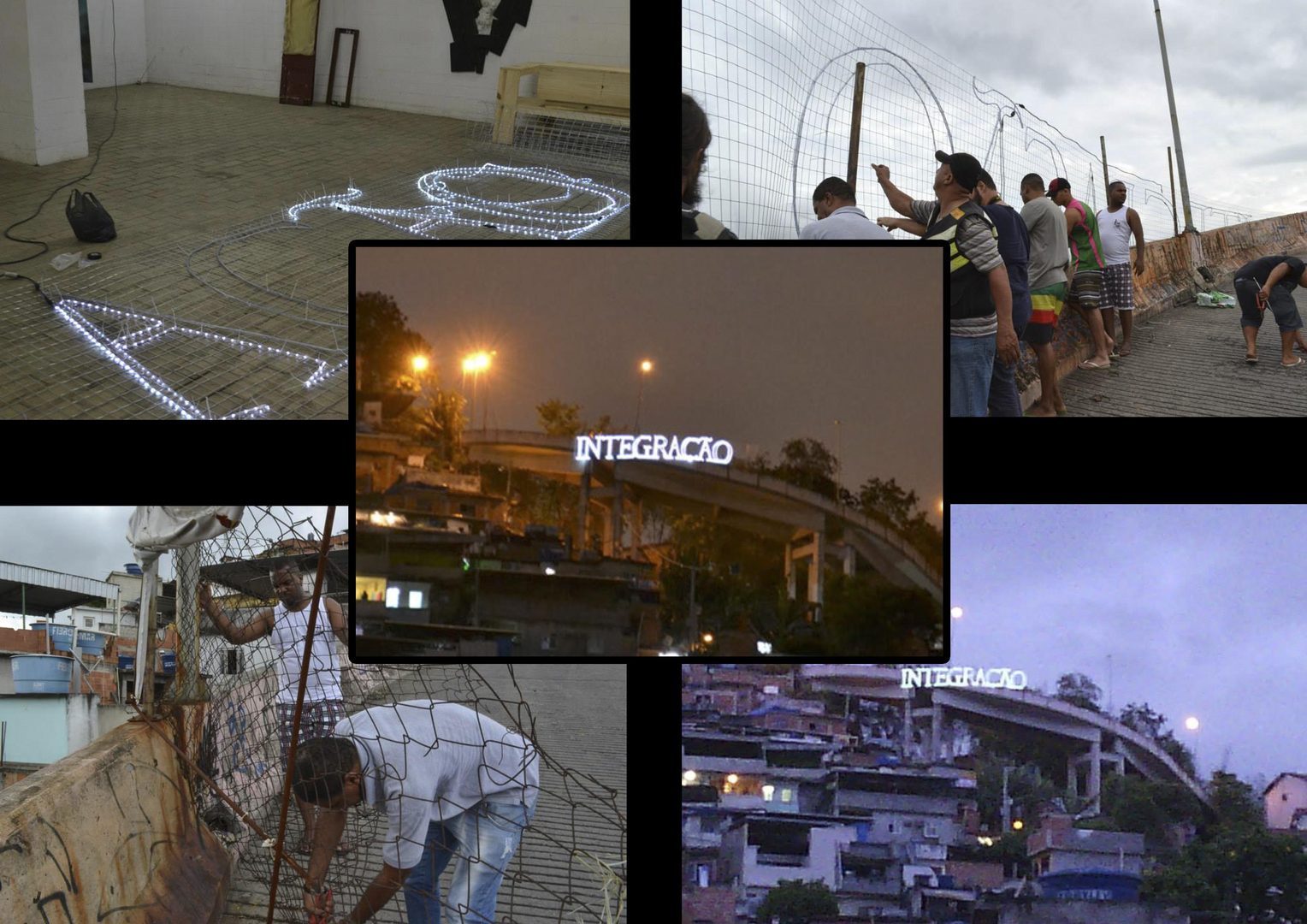
Integração (2014) — Installation, LED lights, metallic cloth and wire, Favela Mangueira, Rio de Janeiro, Brazil. Conceived as a special event for integration through an artistic project carried out in the Mangueira community, open to all who wished to participate.

The Universal Game (2015) — Installation, vinyl canvas and metallic structure, Ottawa, Canada. An outreach project from the Human Rights Research and Education Centre at the University of Ottawa marking International Human Rights Day, December 10.

Something to take into consideration: the day I gave the workshop and we finished this artwork was the same day Donald Trump was elected President of the United States, November 8, 2016 — a controversial fact that could have affected the piece, and that represents a paradox about whether we are taking the right pathway to walk through.

We need to recover the vision of the real power of art — a democratic art, an art for society. This is the challenge we should take nowadays, into worldwide citizens, not just making art for selling or improving ourselves only as individuals. Because of course, art can change the world.
Founder & Executive Director of ARTE, New York, United States

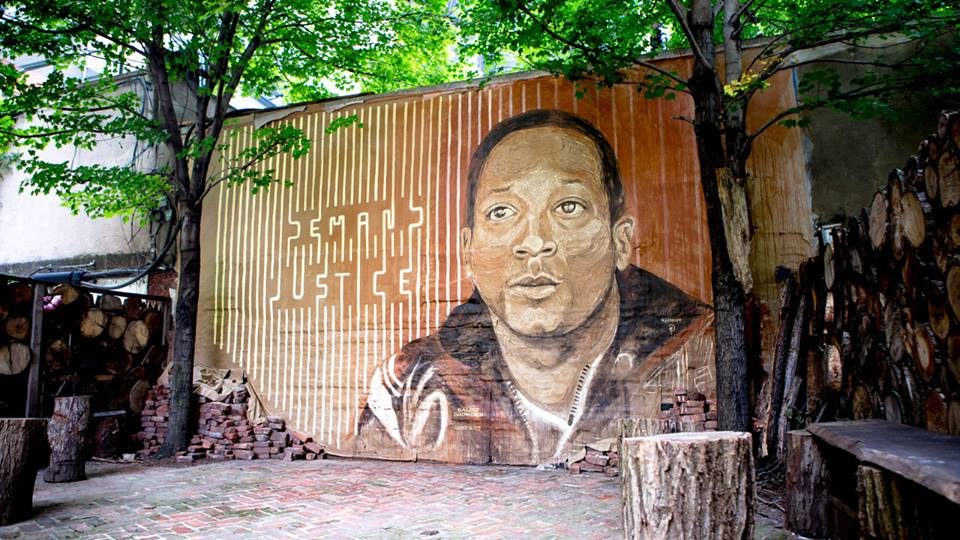
Around four months ago, a community mural was unveiled in the SoHo neighborhood of New York City by two New York-based street artists, Gilf! and Lmnopi. The mural is a simple profile picture of a young Black man, staring at no one in particular, with only the words "Demand Justice" carved out of the white lines intended to depict prison bars.

This past year, an article by Jennifer Gonnerman of The New Yorker revealed the tragic details of the death of Kalief Browder, the young man depicted in the mural. In 2010, at age 16, Browder was accused of stealing a backpack while walking home in the Bronx. Though there was no evidence against him, he was thrown into Rikers Island Correctional Facility for several years without ever being formally convicted. His family was unable to make the $10,000 bail. He stayed there for years, attempting suicide numerous times, before being set free in 2013. In 2015, Kalief Browder tragically committed suicide at the age of 22.

As the Executive Director and Founder of Art and Resistance Through Education (ARTE), we frequently engage young people around global human rights violations through the arts. The United States is one of the few countries in the world that permits the prosecution of children as adults — children as young as 13 have been tried as adults and sentenced to die in prison.

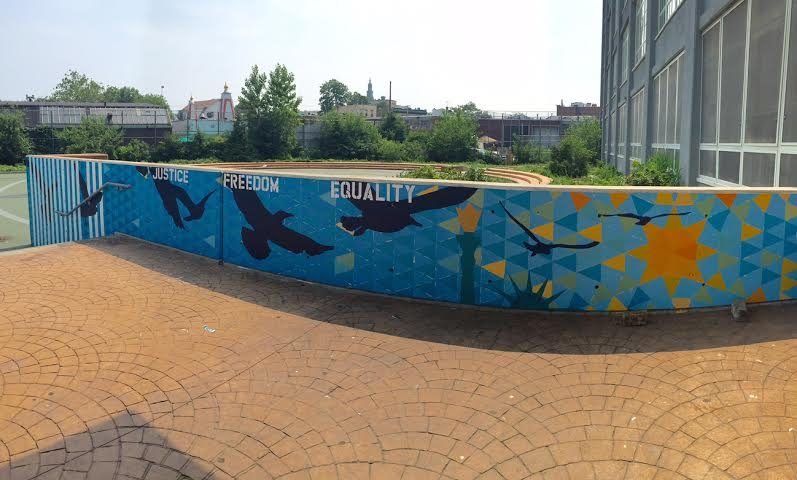
We've found that young people are interested in exploring human rights violations that directly impact the lives of other young people — from human trafficking to child slavery — and feel most compelled to address abuses happening on the local level. At a school in Elmhurst, Queens, students painted a mural of birds escaping prison-like bars toward the Statue of Liberty, representing immigrants moving toward a more just existence.

We believe not only in the power of creating awareness through art, but in organizing communities to take action. Kalief has passed away — the best way we can honor his memory is to never forget him and do everything possible to ensure no other young person ever experiences what he did.

Kalief, you are not forgotten.

Founder of Prints for Peace, Mexico
printsforpeacemexico.blogspot.com →

El proyecto de Arte Desarrollo Humano nació del taller de sobrevivientes de violencia que impartí en Monterrey durante 8 años en ANSPAC-DIF de Monterrey usando arte, desde 2005. En 2005 organizamos la primera exposición de 30 autorretratos de niñas de 13 a 17 años.

En 2007 mi hijo Tin Dirdamal realizó el documental De Nadie sobre las injusticias a los migrantes sudamericanos en su viaje rumbo a Estados Unidos — ganador de más de 25 premios internacionales, incluido el Premio de la Audiencia de Sundance 2006 y el Ariel Mexicano 2006.

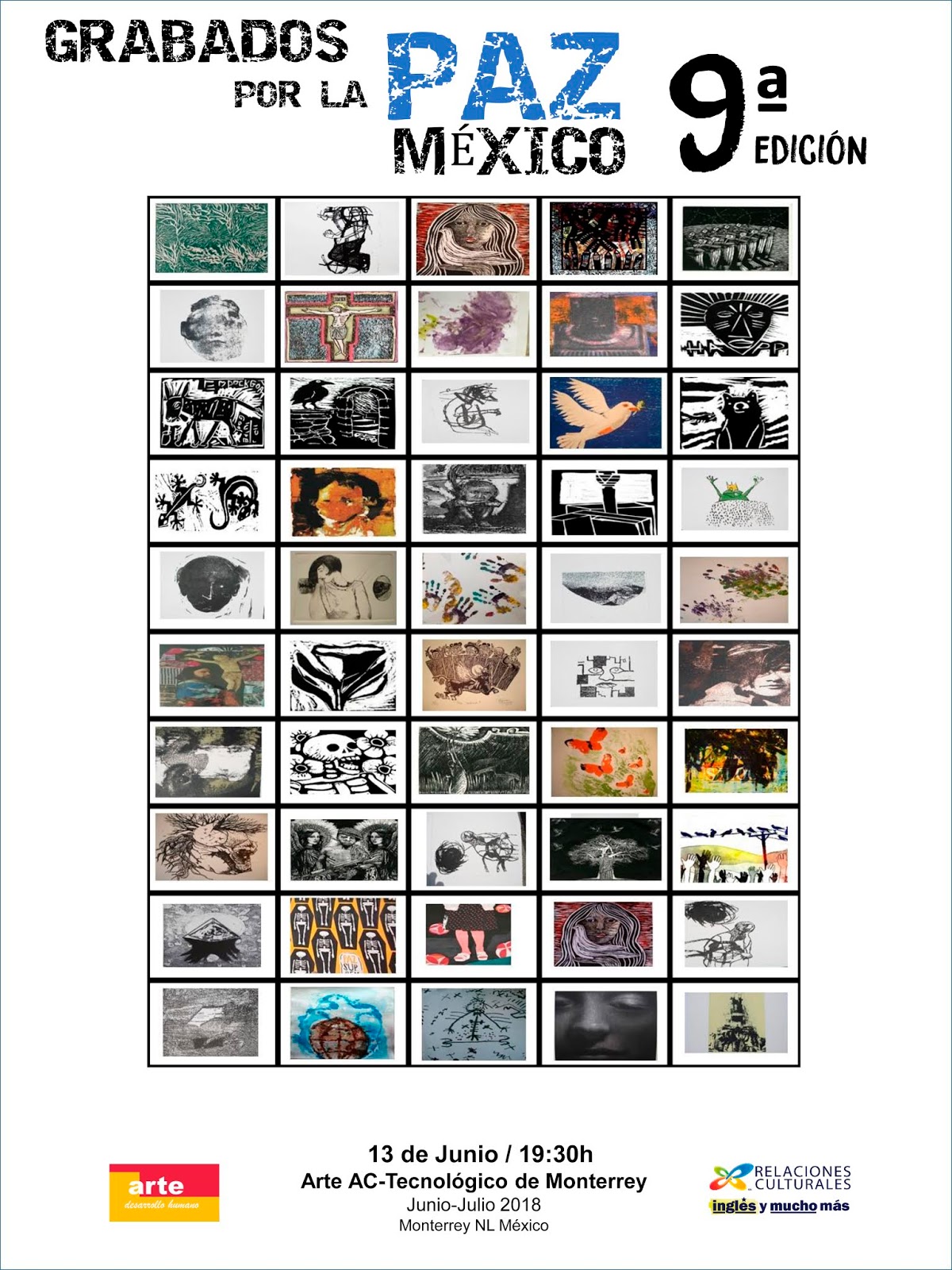
En marzo de 2008 hubo 180 muertes en Monterrey causadas por la violencia organizada — cifras que se volverían mucho más alarmantes con el tiempo. Organizamos Grabados por la Paz México de 2008 a 2014: artistas de 27 países enviaron cientos de grabados para este proyecto.

La exposición más importante, María Reina de la Paz, Arte Inter Religioso, la organizamos desde 2010 en el Centro Cultural Loyola de Monterrey — este año con la participación de 16 de 26 obras que serán donadas al Hospital Universitario.

El arte que envío a convocatorias fuera de México es sobre el tema de Migrantes. El arte que expongo dentro de México es sobre Sobrevivientes de Violencia.

Grabados por la Paz México, 9a Edición — Arte AC, Tecnológico de Monterrey, June–July 2018